
XiaoMi-AI文件搜索系统
World File Search SystemSpeakers

以患者为中心的结果研究战略框架
外部利益相关者:AHRQ要感谢许多外部利益相关者对我们的战略规划过程的意见。This includes individuals and organizations who submitted public comments in response to the Patient-Centered Outcomes Research Trust Fund (PCORTF) Strategic Plan Federal Register Notice, speakers at the National Academies of Sciences, Engineering, and Medicine (NASEM) PCORTF workshop proceedings, PCORTF Subcommittee of the National Advisory Council (SNAC) members, the AHRQ National Advisory Council's (NAC) members, attendees at the Multiple Chronic Conditions Research Summit,美国预防服务工作组(USPSTF)的成员,初级保健研究会议的与会者,以及AHRQ健康公平峰会的与会者。您周到的评论和建议使这个新的战略框架成为可能。
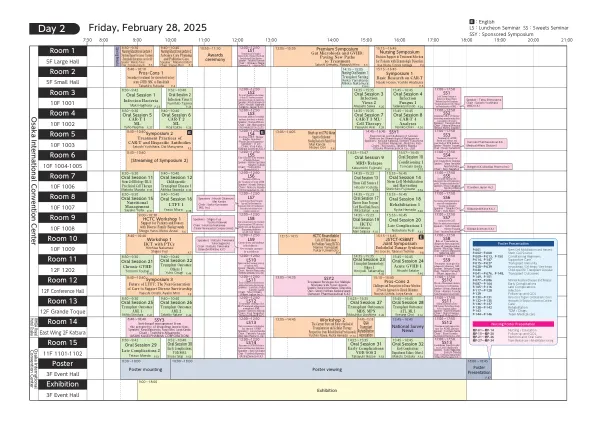
第 2 天 2025 年 2 月 28 日,星期五
SSY1 血液系统恶性肿瘤基因组医学的期望与挑战 演讲者:片冈圭介、福岛健太郎 演讲者:宫本敏宏、加藤基宏 主席:井筒浩二、前田贵宏(大塚制药株式会社)

程序指南
14:00 14:15 14:15 14:30 14:45 14:45 14:45 15:00关于在Latam咖啡 /展览 /展览咖啡 /展览 /展览 /展览 /展览 /展览 /展览 /展览 /展览15:15 15:15 15:15 15:15 15:15 15:30 Therapeutics 16:30 16:45 16:45 17:00 ProstTIC24 Recap Closing Ceremony 17:00 17:15 17:15 17:30 Poster Session 17:30 17:45 17:45 18:00 TME – Panel Discussion 18:00 18:15 18:15 18:30 18:30 18:45 18:45 19:00 19:00 19:15 19:15 19:30 SPEAKERS WELCOME – ROOF TOP HOTEL W14:00 14:15 14:15 14:30 14:45 14:45 14:45 15:00关于在Latam咖啡 /展览 /展览咖啡 /展览 /展览 /展览 /展览 /展览 /展览 /展览 /展览15:15 15:15 15:15 15:15 15:15 15:30 Therapeutics 16:30 16:45 16:45 17:00 ProstTIC24 Recap Closing Ceremony 17:00 17:15 17:15 17:30 Poster Session 17:30 17:45 17:45 18:00 TME – Panel Discussion 18:00 18:15 18:15 18:30 18:30 18:45 18:45 19:00 19:00 19:15 19:15 19:30 SPEAKERS WELCOME – ROOF TOP HOTEL W
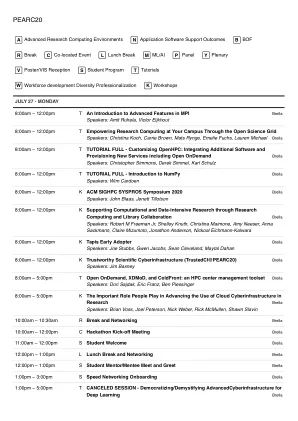
Pearc20时间表
2:35pm – 3:50pm B Ask.CI, the Q&A site for Research Computing : Year 2 Lessons Learned, Plans for Year 3 Speakers: Julie Ma, Torey Battelle, Katia Bulekova, Aaron Culich, Jacob Pessin, Vanessa Sochat, Zoe Braiterman, Dana Brunson, Thomas Cheatham, Julia Cho, Christopher Coffey, Adrian Del Maestro,Shawn Doughty,John Goodhue,Brian Guilfoos,Chris Hill,Robert Knight,Timothy Middelkoop,Lauren Milechin,Kaylea Nelson,Wilbur Ouma,Annelie Rugg,Annelie Rugg,Bruce Segee,Bruce Segee,Raminder Singh,Susan Sons,Susan Sons,Mete Tunca,Scott Tunca,Scott Valcourt,Larry Whitsell,Larry Whitsel,Sccoutt,Sccott

欧盟人工智能法案与国际仲裁
加入我们,深入讨论欧盟人工智能法案如何影响国际仲裁程序。我们的国际杰出演讲嘉宾小组将深入探讨这一重大立法发展对仲裁庭和机构以及其用户带来的影响、挑战和机遇。杰出演讲嘉宾:
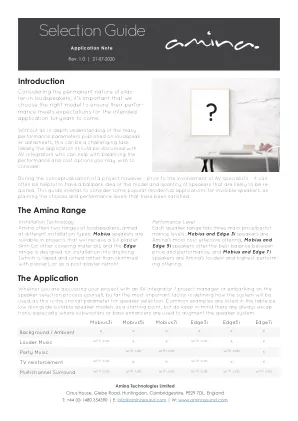
选择指南
厨房里的音响通常用于背景音乐,或者如果偶尔用于娱乐,则可以用于听大声的音乐。上图示例房间是一个相对较大的开放式空间,我们对环境音乐和大声音乐的目标是在整个房间内提供均匀的覆盖,音量尽可能没有变化。当然,实现此目标所需的扬声器数量取决于房间的大小,特别是天花板的高度。在面积相同的房间中,天花板越高,实现均匀覆盖所需的扬声器数量就越少。背面的平面图对此进行了说明,显示了在两种不同的天花板高度下实现均匀覆盖所需的扬声器数量。为了帮助您估算在较大空间中实现均匀覆盖的扬声器数量,Amina 提供了关于如何指定扬声器的详细视频指南,以及显示不同天花板高度的正确扬声器间距的快速参考图。请联系技术支持获取更多信息。

生成的AI和网络安全:双刃剑
“我们能够修改两位演讲者之间发生的现场财务对话的细节,将钱转移到虚假的对抗帐户(在这种情况下是一个不存在的账户),而不是预期的接收者,而没有说话的人意识到他们的呼吁就被损害了……令人震惊的是,它很容易构建这种高度侵入性的能力。”

下载
THEMATIC SESSION II: PARTNERING IN USE OF TECHNOLOGY 79 • New breeding techniques: public research institute perspective • The importance of public-private collaboration to enhance application of biotechnology in plant breeding • How to balance PBR and patents in breeding programs: Lantmännen (farming cooperative) perspective • Discussion with speakers of Session II SESSION III: ROLE OF IP RIGHTS IN SECURING INVESTMENT AND PARTNERSHIPS IN BREEDING 113 •如果您的作物本身会产生大量的EDV•关于新技术和品种开发的知识产权和法律观点•根据1991年UPOV公约和新植物育种技术的植物保护•植物育种者权利和其他形式的IP在促进植物繁殖中的作用•EDV原则在UPOV中的起源和对UPOV的重要性及其在UPOV中的重要性及其在新的繁殖技术中的重要性<

2月 - 大脑故事和弹性量表范围框架
Learn the key metaphors of the Brain Story used to educate the public on the importance of brain development and early experiences in lifelong health outcomes Explore how embedding the Brain Story knowledge in community promotes systems change in policy and practice See how the Resilience Scale can be used in practice for individuals, organizations, and communities to visualize resilience and measure changes over time Learn about work being done in Alberta to evaluate resilience in communities Speakers: Nancy Mannix, Chair和Palix基金会的赞助人。自成立以来,帕利克斯基金会(Palix Foundation)与艾伯塔省和美国的土著观众有意合作,将大脑故事栩栩如生,包括大脑故事教师,White Bison Inc.的创始人兼总裁Don Coyhis。
参考手册 - Trinnov Audio
4.2.1 源 ................................................................................................................................................................................................................... 38 标准设置 .......................................................................................................................................................................................................... 39 4.2.2 扬声器 ...................................................................................................................................................................................................... 40 4.2.3 有源分频器 ............................................................................................................................................................................................. 44 4.2.4 时钟设置 ............................................................................................................................................................................................. 47 4.2.5 源路由 ............................................................................................................................................................................................. 49 4.2.6 扬声器路由 .............................................................................................................................................................................