XiaoMi-AI文件搜索系统
World File Search SystemUSEPA
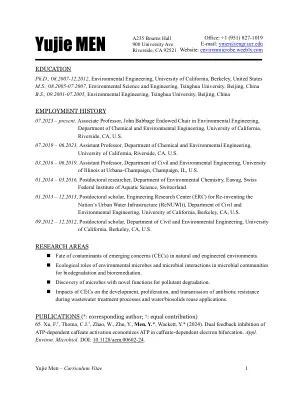
Yujie Men -UCR概况 - 加利福尼亚大学,河滨大学Yujie Men -UCR概况 - 加利福尼亚大学,河滨大学
➢ NSF: A BioFoundry for Extreme & Exceptional Fungi, Archaea and Bacteria (Ex-FAB) (Senior personnel, 2024 – 2030) ➢ SERDP: Screening, Design, and Optimization of Novel Biocatalysts for C-F Bond Cleavage of Per- and Polyfluoroalkyl Substances (PI, $1,058,539, 2024 – 2028, Project No.:ER23-0225)➢NSF-ECS:CAS:对生物核酸化 - 氯氟烷基物质的机械理解(PI,600,000美元,2024 - 2024 - 2027年,奖励号,奖励>:2404351)➢USEPA:可伸缩的催化和辅助技术,用于有效的氢氟碳破坏(Co-Pi,PI:Fudong Liu:Fudong Liu,UC,UC,Riverside,Riverside,2024 - 2029)➢使用PA:使用PFA与PFA相关的PFA和MITAGE-PFAS的污水处理和污水处理(Co co efflus-efflus-files in Co efflus-efflus in Co.-pie co offlus-fipi efflus offlus ofsove( pi:韦伊郑,伊利诺伊大学乌尔巴纳 - 香槟分校,2024年至2027年)➢USDA:囊泡相关的抗生素耐药性基因:对农业水重复使用抗生素抗生素抗生素细菌的命运,转移和贡献:2024-67019-42681)➢USEPA:一项多层研究,旨在建立可归因于市政废水和生物固体的地表水中AMR的风险评估框架(Co-Pi,PI:pi:xu li:xu li,内布拉斯加州大学,内布拉斯加州大学,2024 - 2027年的tracker tracser crockerterperter, “永远的化学品”的生物催化降解(Co-Pi,Pi:Chao Zhou,Geosyntec,奖励号24C0020,2024-2025)➢USDA-NIFA-AFRI:使用多层生物炭的抛光技术来缓解灌溉农业中的抗菌抗药性2023-68015-39269,2023-2027)➢SERDP:使用基于活性的基于活性的基于活性的PFA前体和PFA的生物转化速率估计,PFAS前体和PFAS序列化的生物量序列化估计估计微生物生物量(co-pi,abl)(co-pi:jacob chuy&jaley chuy&jaley&jaley&jaley&jaley&jaley&jaley, ER23-3796,2023-2025)➢SERDP:使用原位缩影评估AFFF的地下水中的多氟烷基物质转化(Co-Pi,Pi:John Xiong:John Xiong,Haley&Aldrich,Inc.在AFFF IMPACT的土壤和地下水中,有毒性的氧化过渡区。(Co-Pi,Pi:D。Wang,ER23-3620,2023-2027)➢NSF:Erase-PFAS:具有高度极化的氧化还原环境的可调真空 - 硫化物辐射系统,用于处理per和多氟烷基物质。(Co-Pi,Pi:H。Liu,奖励编号:2131745,2022-2024)➢NSF-Career:在非抗生素微量造影剂暴露下对抗生素抗性的加速出现和传播的系统理解。(PI,奖励编号:2045658,2021-2026)➢NIEHS:协同物质 - 微生物界面的更快,更深和耐耐空气的还原性去呼其相。(Lead Pi,Pi:C。Liu,奖励编号:R01ES032668,2021-2025)➢USDA-NIFA:农业环境中人为引起人为诱导的抗菌抗性的风险。(Co-Pi,Pi:Ashworth,赠款编号:2021-68015-33505,2020-2024)➢SERDP:还原性脱氟化微生物的识别,表征和应用。
增强美国水系统的网络弹性
为这种新方法提供资源对于成功支持水务部门的网络需求至关重要。WRRO 的初步建立可以通过国会直接拨款或美国环保署的预算合理地获得支持。从长远来看,WRRO 需要选择一种可持续的资金方式,例如基于服务客户数量的收费制度,以公平地支持性能标准和合规性评估的发展。尽可能降低此类成本对于成功至关重要。因此,制定新的强制性性能标准也将为网络安全提供最大的投资回报。以下分析提出了美国水务系统如何组织协作方法以有效满足我们共同的网络安全需求的选项。
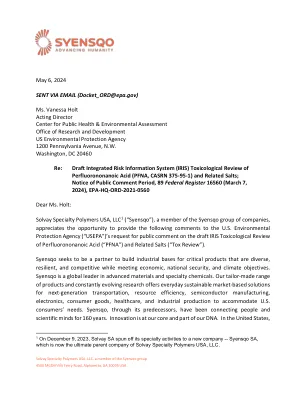
2024年5月6日通过电子邮件发送(docket_ord@epa。...
2024年5月6日通过电子邮件(doc_ord@epa.gov)发送的范妮莎·霍尔特(Vanessa Holt)女士代理总监公共卫生与环境评估办公室中心美国环境保护局1200宾夕法尼亚州宾夕法尼亚州大街1200号。华盛顿特区20460 RE:综合风险信息系统草案(IRIS)对全氟唱酸(PFNA,CASRN 375-95-1)和相关盐的毒理学评论;公开评论期的通知,89联邦公报16560(2024年3月7日),EPA-HQ-Ford-2021-0560亲爱的霍尔特女士:Solvay Specialty Polymers USA,LLC 1(“ Syensqo”)(“ Syensqo”)全氟烷酸(“ PFNA”)和相关盐(“ Tox评论”)。
Herbicide Strategy to Reduce Exposure of Federally Listed ...
1. Executive Summary When the Environmental Protection Agency (EPA or Agency) takes an action on a pesticide registration ( e.g., registers a pesticide or reevaluates it in registration review) under the Federal Insecticide, Fungicide, and Rodenticide Act (FIFRA), the Agency is responsible under the Endangered Species Act (ESA) to ensure that the action is not likely to jeopardize the continued existence of federally threatened or endangered (referred to as “listed”) species, or result in the destruction or adverse modification of their designated critical habitats. Chemical stressors, such as pesticides, are one of many factors that can contribute to population declines of listed species. Meeting this ESA responsibility is a formidable task, considering the tens of thousands of pesticide products and registration amendments for which EPA is required to review the potential effects for over 1,700 U.S. listed species. Given these challenges, in April 2022, EPA released a workplan (USEPA, 2022a) and an update to the workplan in November 2022 (USEPA, 2022b) that describe how it plans to meet its ESA obligations as part of pesticide registration processes under FIFRA. The update also describes strategies for identifying early mitigation measures to address potential population-level impacts to listed species across groups of chemicals ( e.g ., herbicides, rodenticides, insecticides) or in certain regions of the U.S. These strategies intend to more efficiently determine whether, how much, and where mitigations may be needed to protect listed species from many uses of conventional pesticides. This final Herbicide Strategy is another key step in meeting this goal. This Herbicide Strategy covers only conventional herbicides - an important, widely used tool for growers to prevent or eliminate weeds that compete with crops for light, moisture, and nutrients. EPA focused the strategy on agricultural uses in the lower 48 states because hundreds of millions of pounds of herbicides (and plant growth regulators) are applied each year (USEPA, 2017), which is substantially more than for non-agricultural uses and for other pesticide classes ( e.g. , insecticides, fungicides). In addition, there are hundreds of species listed by the U.S. Fish & Wildlife Service (FWS) 1 in the contiguous U.S. The mitigations identified in the strategy would address potential impacts to listed plants (terrestrial, wetland, and aquatic), which are the types of species likely to be most impacted by herbicides. By identifying mitigations to protect plants, listed animal species that depend on plants would also be protected. This includes animals that depend on plants for food and shelter (habitat). By identifying and defining mitigations for these listed plant and animal species, EPA will consider and apply this final Herbicide Strategy as appropriate in FIFRA actions, which should result in reductions of population-level impacts to over 900 listed species in the lower 48 states. The Herbicide Strategy is intended to create a consistent, reasonable, transparent, and understandable approach to assess potential impacts and identify mitigations to reduce potential population-level impacts to listed species from the use of agricultural herbicides. The strategy does not include ESA effects determinations, but instead is meant to identify proactive mitigations that can be applied in registration and registration review actions to reduce pesticide impacts to listed species. The strategy is intended to provide similar and consistent mitigations for herbicides with similar characteristics ( e.g. ,
转发:GPA FY2023 年度报告和以公民为中心的报告
清洁能源总体规划 (CEMP)/综合资源计划 (IRP) • 关岛从传统化石燃料发电向可再生能源和无温室气体排放电力供应转型的全面路线图。减少 GPA 的碳足迹,提高能源可靠性,确保能源弹性,减少浪费并提高可负担性。 • 满足美国环保署同意令的所有清洁空气合规要求,避免数百万美元的潜在罚款和罚金。 • 指导对新一代资源的需求进行评估和采取行动,以满足未来的负荷增长,满足所有环境要求,并优化所有成本。 • 采取平衡的方法,包括能源效率、可再生能源、电网转型和交通电气化,以确保关岛的能源未来。
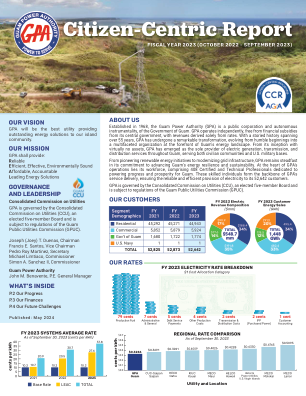
2023 财年以公民为中心的报告:关岛电力局
清洁能源总体规划 (CEMP)/综合资源计划 (IRP) • 关岛从传统化石燃料发电向可再生能源和无温室气体排放电力供应转型的全面路线图。减少 GPA 的碳足迹,提高能源可靠性,确保能源弹性,减少浪费并提高可负担性。 • 满足美国环保署同意令的所有清洁空气合规要求,避免数百万美元的潜在罚款和罚金。 • 指导对新一代资源的需求进行评估和采取行动,以满足未来的负荷增长,满足所有环境要求,并优化所有成本。 • 采取平衡的方法,包括能源效率、可再生能源、电网转型和交通电气化,以确保关岛的能源未来。
进行水生毒性测试的实验室
本文件为评估涉及毒性测试以及淡水和海洋鱼类、无脊椎动物和植物培养以用于废水和地表水毒性测试的生物实验室提供了指导方针。涵盖的主题包括:。评估标准、审计和评估准备、组织历史、实验室人员、设施、设备和用品、方法、样品收集、处理和保存、质量保证、记录和数据报告、安全和报告准备。执行水生生物实验室现场审计和评估的评估员必须具备 NPDES 计划的工作知识,并具备足够的生物监测和毒性测试方法知识和经验。本手册旨在帮助国家污染物排放消除系统 (NPDES) 评估员/检查员执行美国环境保护署 (USEPA) {1988a) NPDES 合规性检查手册中规定的合规性评估检查 (CEI) 和绩效审计检查 (PAI)。
新泽西州环境保护部 - NJ.gov
水银行的优先事项和政策在预期用途计划 (IUP) 中确定。优先系统/IUP 文件必须每年制定一次,经过公众参与流程,并获得美国环境保护署 (USEPA) 的批准,以便该州有资格获得 SRF 资本化补助金来支持水银行。2024 年联邦财政年度 (FFY)/2025 年州财政年度 (SFY) IUP 提供了有关如何使用通过该部门和 I-Bank 提供的饮用水资金为饮用水项目提供财政援助的信息,并确定了管理贷款奖励的州政策。有资格获得融资的项目包括各种饮用水处理,包括解决饮用水中铅暴露、违反最大污染物水平、不受管制的污染物、急性健康影响(例如地表水处理规则要求)的项目。
进行水生毒性测试的实验室
本文件为评估涉及毒性测试以及用于废水和地表水毒性测试的淡水和海洋鱼类、无脊椎动物和植物培养的生物实验室提供指导方针。涵盖的主题包括:评估标准、审计和评估准备、组织历史、实验室人员、设施、设备和用品、方法、样品收集、处理和保存、质量保证、记录和数据报告、安全和报告准备。执行水生生物实验室现场审计和评估的评估员必须具备 NPDES 计划的工作知识,并具备足够的生物监测和毒性测试方法知识和经验。本手册旨在帮助国家污染物排放消除系统 (NPDES) 评估员/检查员执行美国环境保护署 (1988a)《NPDES 合规性检查手册》中规定的合规性评估检查 (CEI) 和绩效审计检查 (PAI)。